Produktbeschreibung
beschreibung
Physiologische Wirkungen
- Verbessert Gedächtnis, Konzentration und Reaktionsfähigkeit
- Optimiert mentale und körperliche Leistungsfähigkeit
- Wirkt psychischem und körperlichem Stress entgegen
Inhaltsstoffe
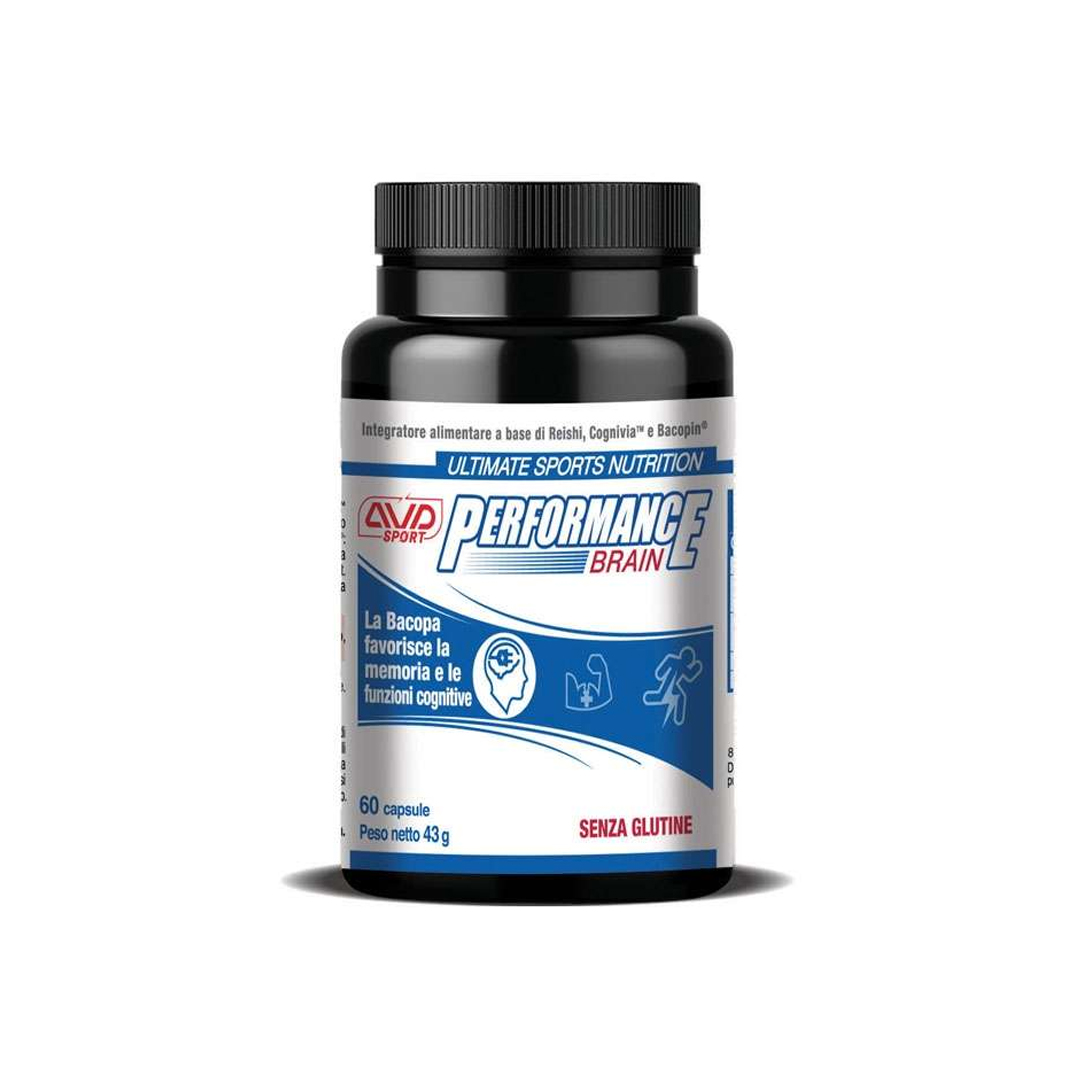
- Reishi (Ganoderma lucidum) BIO: Einer der am häufigsten von Sportlern verwendeten Pilze. Er erhöht das Energieniveau, verbessert die Zellatmung, schützt die mitochondriale Funktion vor oxidativem Stress und reduziert chronische niedriggradige Entzündungen. Zudem wirkt er geistiger und körperlicher Erschöpfung entgegen und verbessert Gedächtnis sowie Konzentration. Dank seines hohen Gehalts an Triterpenen moduliert er die Stressachse, unterstützt die Nebennieren sowie die Hypothalamus-Hypophysen-Nebennieren-Achse (HPA-Achse), reduziert das Müdigkeitsgefühl und reguliert den Schlafrhythmus.
- Cognivia™: Kombiniert die Eigenschaften von zwei Salbeiarten. Salvia officinalis verbessert die kognitive Leistungsfähigkeit und die Zielorientierung, während die ätherischen Öle von Salvia lavandulifolia die Gedächtnisprozesse beschleunigen. Studien zeigen eine Verbesserung der kognitiven Funktionen sowie der Langzeit- und exekutiven Gedächtnisleistung – bereits nach einmaliger Einnahme.
- Bacopin®:(standardisierter Extrakt aus Bacopa monnieri, titriert auf 20 % Bacoside): Unterstützt Gedächtnis, Konzentration und kognitive Funktionen. Auf körperlicher Ebene verbessert Bacopa die sportliche Leistungsfähigkeit, reduziert Muskelermüdung und erhöht die Glykogenspeicher. Kognitiv steigert es Reaktionsgeschwindigkeit, Aufmerksamkeit sowie räumliches und Arbeitsgedächtnis und verbessert die Reflexe.
- Newcaff® (mikroverkapseltes Koffein): Koffein ist eine ergogene Substanz. Durch Mikroverkapselung wird die Bioverfügbarkeit verbessert und eine kontrollierte, verlängerte Freisetzung über bis zu 4 Stunden ermöglicht. Die Wirksamkeit wurde sowohl bei Ausdauer- als auch bei Kraft- und Intervallsportlern nachgewiesen – ohne Beeinflussung des Insulin- und Blutzuckerspiegels.
| Durchschnittlicher Gehalt der Inhaltsstoffe | pro Tagesdosis (3 Kapseln) |
|---|---|
| Ganoderma lucidum (Reishi) | 565 mg |
| Cognivia® (Salvia officinalis und Salvia lavandulifolia) | 500 mg |
| Bacopin® (Bacopa monnieri), titriert auf 20 % | 570 mg |
| davon Bacoside | 75 mg |
| Koffein | 75 mg |
Anwendung
Es wird empfohlen, 1 Kapsel täglich zur Erhaltung einzunehmen. Die Dosis kann zwei Tage vor einem Wettkampf schrittweise um jeweils 1 Kapsel pro Tag erhöht werden, bis zu 4 Kapseln am Tag der Leistung.
Format
Packung mit 60 Kapseln
Hinweise
Zertifiziert „Play Sure – Doping Free“
EAN-Code: 8059173430123

Literatur
- Potgieter, S et al. “Caffeine improves triathlon performance: a field study in males and females.” International journal of sport nutrition and exercise metabolism 28.3 (2018): 228-237.
- Schneiker, KT, et al. “Effects of caffeine on prolonged intermittent-sprint ability in team-sport athletes.” Medicine and science in sports and exercise 38.3 (2006): 578-585.
- Stuart, GR., et al. “Multiple effects of caffeine on simulated high-intensity team-sport performance.” Medicine and science in sports and exercise 37.11 (2005): 1998.
- Evans, Mark, et al. “Acute Ingestion of Caffeinated Chewing Gum Improves Repeated Sprint Performance of Team Sport Athletes With Low Habitual Caffeine Consumption.” International journal of sport nutrition and exercise metabolism 28.3 (2018): 221-227.
- López-González, LM., et al. “Acute caffeine supplementation in combat sports: a systematic review.” Journal of the international society of sports nutrition 15.1 (2018): 60.
- Brooks, JH., et al. “Caffeine supplementation as an ergogenic aid for muscular strength and endurance: a recommendation for coaches and athletes.” (2016).
- Nehlig, Astrid. “Is caffeine a cognitive enhancer?.” Journal of Alzheimer’s Disease 20.s1 (2010): S85-S94.
- Panza, F, et al. “Coffee, tea, and caffeine consumption and prevention of late-life cognitive decline and dementia: a systematic review.” The journal of nutrition, health & aging 19.3 (2015): 313-328.
- Tildesley N.T.J. et al. Positive modulation of mood and cognitive performance following administration of acute doses of Salvia lavandulaefolia essential oil to healthy young volunteers. Physiology & Behavior 83 (2005) 699-709
- Kennedy D.O. et al. Effects of Cholinesterase Inhibiting Sage (Salvia officinalis) on Mood, Anxiety, and Performance on a psychological Stressor Battery. Neuropsychopharmacology (2006) 31, 845-852
- Scholey A.B. et al. An extract of Salvia (Sage) with anticholinesterase properties improves memory and attention in healthy older volunteers. Psychopharmacology (2008) 198:127-139
- Tildesley N.T.J. et al. Salvia lavandulaefolia (Spanish Sage) enhances memory in healthy young volunteers. Pharmacology, Biochemistry and Behavior (2003) 75: 669-674.
- Kennedy D.O. et al. Monoterpenoid extract of Sage (Salvia lavandulaefolia) with cholinesterase inhibiting properties improves cognitive performance and mood in healthy adults. Journal of Psychopharmacology. (2011) 25(08): 1088-1100.
- Pase, MP., et al. “The cognitive-enhancing effects of Bacopa monnieri: a systematic review of randomized, controlled human clinical trials.” The Journal of Alternative and Complementary Medicine 18.7 (2012): 647- 652.
- Roodenrys, S, et al. “Chronic effects of Brahmi (Bacopa monnieri) on human memory.” Neuropsychopharmacology 27.2 (2002): 279.
- Calabrese, C, et al. “Effects of a standardized Bacopa monnieri extract on cognitive performance, anxiety, and depression in the elderly: a randomized, double-blind, placebo-controlled trial.” The journal of alternative and complementary medicine 14.6 (2008): 707-713.
- Chaudhari, KS., et al. “Neurocognitive effect of nootropic drug Brahmi (Bacopa monnieri) in Alzheimer’s disease.” Annals of neurosciences 24.2 (2017): 111-122.
- Simpson, T et al. “Bacopa monnieri as an antioxidant therapy to reduce oxidative stress in the aging brain.” Evidence-Based Complementary and Alternative Medicine 2015 (2015).
- Nemetchek, MD., et al. “The Ayurvedic plant Bacopa monnieri inhibits inflammatory pathways in the brain.” Journal of ethnopharmacology 197 (2017): 92-100.
- Shinomol, GK et al. “Bacopa monnieri extract offsets rotenone-induced cytotoxicity in dopaminergic cells and oxidative impairments in mice brain.” Cellular and molecular neurobiology 32.3 (2012): 455-465.
- Swathi, G, et al. “Alterations of cholinergic neurotransmission in rotenone induced Parkinson’s disease: protective role of Bacopa monnieri.” Int J Pharm Biol Sci 3 (2013): 286-292.
- Hosamani, R. “Prophylactic treatment with Bacopa monnieri leaf powder mitigates paraquat-induced oxidative perturbations and lethality in Drosophila melanogaster.” (2010).
- Krishna, G., et al. “Bacopa monnieri Supplements Offset Paraquat-Induced Behavioral Phenotype and Brain Oxidative Pathways In Mice.” Central nervous system agents in medicinal chemistry (2019).
- Chen, Zhidan, et al. “Pharmaceutical composition and drug effect of synthetic Bacopa monnieri L. health promoting agent from the perspective of resistance fatigue.” Pakistan journal of pharmaceutical sciences 30 (2017).
- Kennedy, David O. “Phytochemicals for improving aspects of cognitive function and psychological state potentially relevant to sports performance.” Sports Medicine (2018): 1-20.
- Peth-Nui T, et al. Effects of 12-week Bacopa monnieri consumption on attention, cognitive processing, working memory, and functions of both cholinergic and monoaminergic systems in healthy elderly volunteers.
- Evid Based Complement Alternat Med. 2012;2012:606424.
- Tang, W, et al. “A randomized, double-blind and placebo-controlled study of a Ganoderma lucidum polysaccharide extract in neurasthenia.” Journal of medicinal food 8.1 (2005): 53-58.
- Zhang, XQ, et al. “Triterpenoids with neurotrophic activity from Ganoderma lucidum.” Natural product research 25.17 (2011): 1607-1613.
- Zhang, R, et al. “Ganoderma lucidum protects dopaminergic neuron degeneration through inhibition of microglial activation.” Evidence-Based Complementary and Alternative Medicine 2011 (2011).
- Cui, XY, et al. “Extract of Ganoderma lucidum prolongs sleep time in rats.” Journal of ethnopharmacology 139.3 (2012): 796-800.
- Cai, Q, et al. “Polysaccharides from Ganoderma lucidum attenuate microglia-mediated neuroinflammation and modulate microglial phagocytosis and behavioural response.” Journal of neuroinflammation 14.1 (2017): 63.
- Jin, M, et al. “Effects of polysaccharide from mycelia of Ganoderma lucidum on intestinal barrier functions of rats.” International journal of biological macromolecules 94 (2017): 1-9.
- Chang, CJ, et al. “Ganoderma lucidum reduces obesity in mice by modulating the composition of the gut microbiota.” Nature communications 6 (2015): 7489.
- Kaur, R et al. “Anti-amnesic effects of Ganoderma species: a possible cholinergic and antioxidant mechanism.” Biomedicine & Pharmacotherapy 92 (2017): 1055-1061.
- Khatian, N, et al. “Effect of Ganoderma lucidum on memory and learning in mice.” Clinical Phytoscience5.1 (2019): 4.
- Zhang, Y, et al. “Influence of Ganoderma lucidum triterpenoids on learning memory function and ACh content in Alzheimer disease model rat.” Chin J Exp Tradit Med Formulae 16.16 (2012): 172-175.
- Huang, S, et al. “Polysaccharides from Ganoderma lucidum promote cognitive function and neural progenitor proliferation in mouse model of Alzheimer’s disease.” Stem cell reports 8.1 (2017): 84-94.