Product Description
Description
Physiological effects
- Improves memory, focus, and responsiveness
- Optimizes mental and physical performance
- Helps counter physical and mental stress
Ingredients
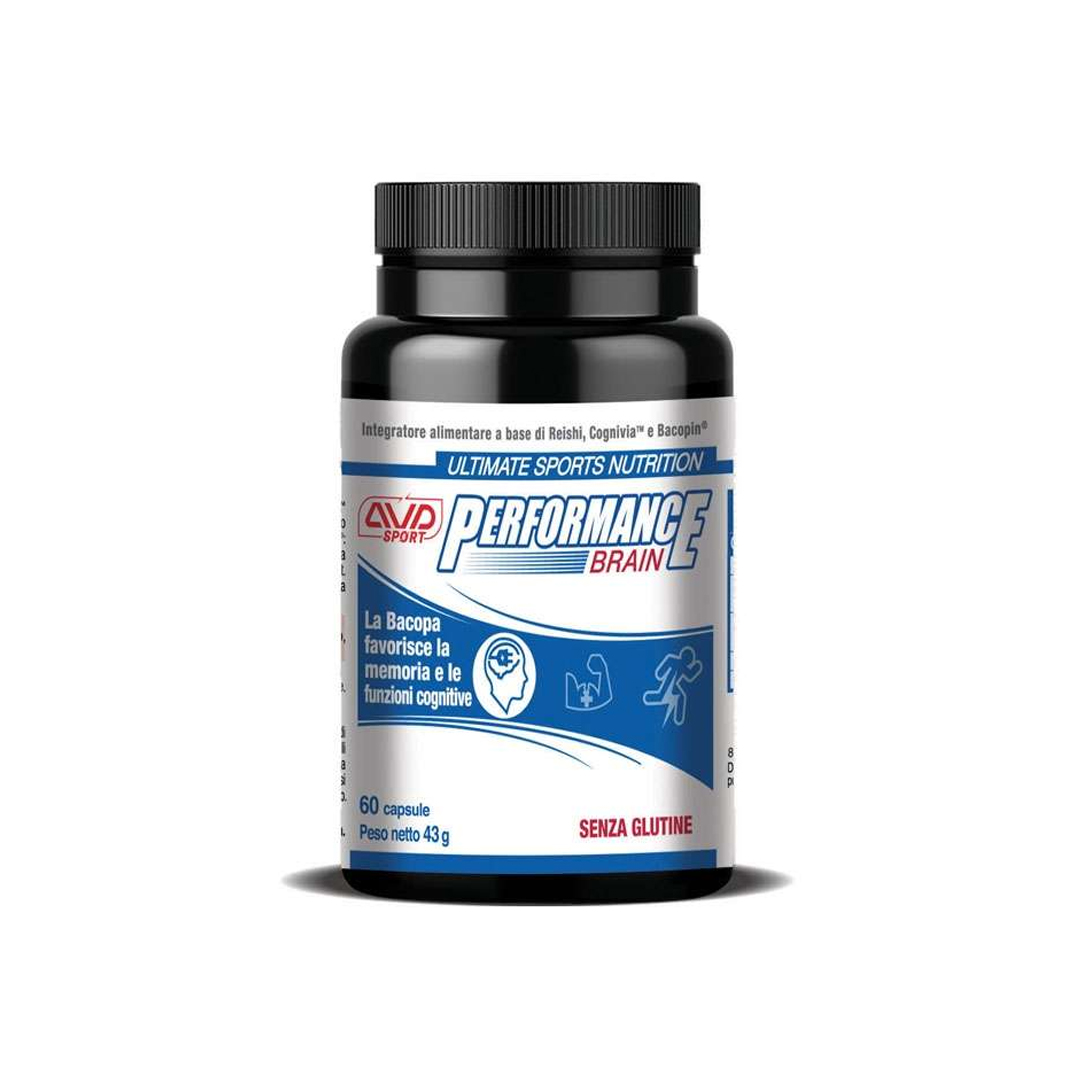
- Reishi (Ganoderma lucidum) BIO: è uno dei funghi più utilizzati dagli sportivi: aumenta i livelli di energia, migliora la respirazione cellulare, protegge la funzione mitocondriale dallo stress ossidativo, riduce l’infiammazione cronica di basso grado, contrasta la stanchezza psico-fisica migliorando anche memoria e concentrazione focalizzata. Grazie all’elevata presenza di triterpeni modula l’asse dello stress, sostiene le ghiandole surrenali e l’asse ipotalamo-ipofisi-surreni, riduce la sensazione di fatica, regolarizzando i ritmi del sonno
- Cognivia™: Combines the properties of two sage species. Salvia officinalis enhances cognitive performance and goal-oriented focus, while essential oils from Salvia lavandulifolia accelerate memory processes. Studies show improvements in cognitive function, including long-term and executive memory, even after a single dose.
- Bacopin®: (standardized extract of Bacopa monnieri, titrated to 20% bacosides): Supports memory, concentration, and cognitive function. On a physical level, Bacopa improves athletic performance, reduces muscle fatigue, and increases muscle glycogen reserves. Cognitively, it enhances reaction speed, attention, spatial and working memory, and reflex readiness.
- Newcaff® (microencapsulated caffeine): Caffeine is an ergogenic substance. Microencapsulation improves its bioavailability and allows a controlled, sustained release over approximately 4 hours. Its effectiveness has been demonstrated in endurance athletes, intermittent sprint activities, and strength and power sports without affecting insulin and blood glucose levels.
| Average content of ingredients | per daily dose
(3 capsules) |
|---|---|
| Ganoderma lucidum (Reishi) | 565 mg |
| Cognivia® (Salvia officinalis and Salvia lavandulifolia) | 500 mg |
| Bacopin® (Bacopa monnieri), standardized to 20% | 570 mg |
| of which bacosides | 75 mg |
| Caffeine | 75 mg |
Directions for use
Take 1 capsule per day for maintenance. Increase the dose by 1 capsule per day starting two days before competition, up to 4 capsules on the day of performance.
Format
Pack of 60 capsules
Notes
Certified “Play Sure – Doping Free”
EAN code: 8059173430123

Literatur
- Potgieter, S et al. “Caffeine improves triathlon performance: a field study in males and females.” International journal of sport nutrition and exercise metabolism 28.3 (2018): 228-237.
- Schneiker, KT, et al. “Effects of caffeine on prolonged intermittent-sprint ability in team-sport athletes.” Medicine and science in sports and exercise 38.3 (2006): 578-585.
- Stuart, GR., et al. “Multiple effects of caffeine on simulated high-intensity team-sport performance.” Medicine and science in sports and exercise 37.11 (2005): 1998.
- Evans, Mark, et al. “Acute Ingestion of Caffeinated Chewing Gum Improves Repeated Sprint Performance of Team Sport Athletes With Low Habitual Caffeine Consumption.” International journal of sport nutrition and exercise metabolism 28.3 (2018): 221-227.
- López-González, LM., et al. “Acute caffeine supplementation in combat sports: a systematic review.” Journal of the international society of sports nutrition 15.1 (2018): 60.
- Brooks, JH., et al. “Caffeine supplementation as an ergogenic aid for muscular strength and endurance: a recommendation for coaches and athletes.” (2016).
- Nehlig, Astrid. “Is caffeine a cognitive enhancer?.” Journal of Alzheimer’s Disease 20.s1 (2010): S85-S94.
- Panza, F, et al. “Coffee, tea, and caffeine consumption and prevention of late-life cognitive decline and dementia: a systematic review.” The journal of nutrition, health & aging 19.3 (2015): 313-328.
- Tildesley N.T.J. et al. Positive modulation of mood and cognitive performance following administration of acute doses of Salvia lavandulaefolia essential oil to healthy young volunteers. Physiology & Behavior 83 (2005) 699-709
- Kennedy D.O. et al. Effects of Cholinesterase Inhibiting Sage (Salvia officinalis) on Mood, Anxiety, and Performance on a psychological Stressor Battery. Neuropsychopharmacology (2006) 31, 845-852
- Scholey A.B. et al. An extract of Salvia (Sage) with anticholinesterase properties improves memory and attention in healthy older volunteers. Psychopharmacology (2008) 198:127-139
- Tildesley N.T.J. et al. Salvia lavandulaefolia (Spanish Sage) enhances memory in healthy young volunteers. Pharmacology, Biochemistry and Behavior (2003) 75: 669-674.
- Kennedy D.O. et al. Monoterpenoid extract of Sage (Salvia lavandulaefolia) with cholinesterase inhibiting properties improves cognitive performance and mood in healthy adults. Journal of Psychopharmacology. (2011) 25(08): 1088-1100.
- Pase, MP., et al. “The cognitive-enhancing effects of Bacopa monnieri: a systematic review of randomized, controlled human clinical trials.” The Journal of Alternative and Complementary Medicine 18.7 (2012): 647- 652.
- Roodenrys, S, et al. “Chronic effects of Brahmi (Bacopa monnieri) on human memory.” Neuropsychopharmacology 27.2 (2002): 279.
- Calabrese, C, et al. “Effects of a standardized Bacopa monnieri extract on cognitive performance, anxiety, and depression in the elderly: a randomized, double-blind, placebo-controlled trial.” The journal of alternative and complementary medicine 14.6 (2008): 707-713.
- Chaudhari, KS., et al. “Neurocognitive effect of nootropic drug Brahmi (Bacopa monnieri) in Alzheimer’s disease.” Annals of neurosciences 24.2 (2017): 111-122.
- Simpson, T et al. “Bacopa monnieri as an antioxidant therapy to reduce oxidative stress in the aging brain.” Evidence-Based Complementary and Alternative Medicine 2015 (2015).
- Nemetchek, MD., et al. “The Ayurvedic plant Bacopa monnieri inhibits inflammatory pathways in the brain.” Journal of ethnopharmacology 197 (2017): 92-100.
- Shinomol, GK et al. “Bacopa monnieri extract offsets rotenone-induced cytotoxicity in dopaminergic cells and oxidative impairments in mice brain.” Cellular and molecular neurobiology 32.3 (2012): 455-465.
- Swathi, G, et al. “Alterations of cholinergic neurotransmission in rotenone induced Parkinson’s disease: protective role of Bacopa monnieri.” Int J Pharm Biol Sci 3 (2013): 286-292.
- Hosamani, R. “Prophylactic treatment with Bacopa monnieri leaf powder mitigates paraquat-induced oxidative perturbations and lethality in Drosophila melanogaster.” (2010).
- Krishna, G., et al. “Bacopa monnieri Supplements Offset Paraquat-Induced Behavioral Phenotype and Brain Oxidative Pathways In Mice.” Central nervous system agents in medicinal chemistry (2019).
- Chen, Zhidan, et al. “Pharmaceutical composition and drug effect of synthetic Bacopa monnieri L. health promoting agent from the perspective of resistance fatigue.” Pakistan journal of pharmaceutical sciences 30 (2017).
- Kennedy, David O. “Phytochemicals for improving aspects of cognitive function and psychological state potentially relevant to sports performance.” Sports Medicine (2018): 1-20.
- Peth-Nui T, et al. Effects of 12-week Bacopa monnieri consumption on attention, cognitive processing, working memory, and functions of both cholinergic and monoaminergic systems in healthy elderly volunteers.
- Evid Based Complement Alternat Med. 2012;2012:606424.
- Tang, W, et al. “A randomized, double-blind and placebo-controlled study of a Ganoderma lucidum polysaccharide extract in neurasthenia.” Journal of medicinal food 8.1 (2005): 53-58.
- Zhang, XQ, et al. “Triterpenoids with neurotrophic activity from Ganoderma lucidum.” Natural product research 25.17 (2011): 1607-1613.
- Zhang, R, et al. “Ganoderma lucidum protects dopaminergic neuron degeneration through inhibition of microglial activation.” Evidence-Based Complementary and Alternative Medicine 2011 (2011).
- Cui, XY, et al. “Extract of Ganoderma lucidum prolongs sleep time in rats.” Journal of ethnopharmacology 139.3 (2012): 796-800.
- Cai, Q, et al. “Polysaccharides from Ganoderma lucidum attenuate microglia-mediated neuroinflammation and modulate microglial phagocytosis and behavioural response.” Journal of neuroinflammation 14.1 (2017): 63.
- Jin, M, et al. “Effects of polysaccharide from mycelia of Ganoderma lucidum on intestinal barrier functions of rats.” International journal of biological macromolecules 94 (2017): 1-9.
- Chang, CJ, et al. “Ganoderma lucidum reduces obesity in mice by modulating the composition of the gut microbiota.” Nature communications 6 (2015): 7489.
- Kaur, R et al. “Anti-amnesic effects of Ganoderma species: a possible cholinergic and antioxidant mechanism.” Biomedicine & Pharmacotherapy 92 (2017): 1055-1061.
- Khatian, N, et al. “Effect of Ganoderma lucidum on memory and learning in mice.” Clinical Phytoscience5.1 (2019): 4.
- Zhang, Y, et al. “Influence of Ganoderma lucidum triterpenoids on learning memory function and ACh content in Alzheimer disease model rat.” Chin J Exp Tradit Med Formulae 16.16 (2012): 172-175.
- Huang, S, et al. “Polysaccharides from Ganoderma lucidum promote cognitive function and neural progenitor proliferation in mouse model of Alzheimer’s disease.” Stem cell reports 8.1 (2017): 84-94.