 English
  Italian
 Deutsch

Product Description
Description
What is ubiquinol?
Coenzyme Q10 is a fat-soluble substance that occurs naturally in the human body, particularly in cell membranes and mitochondria.
It occurs mainly in two forms:
- Ubiquinone, the oxidized form;
- Ubiquinol, the reduced form.
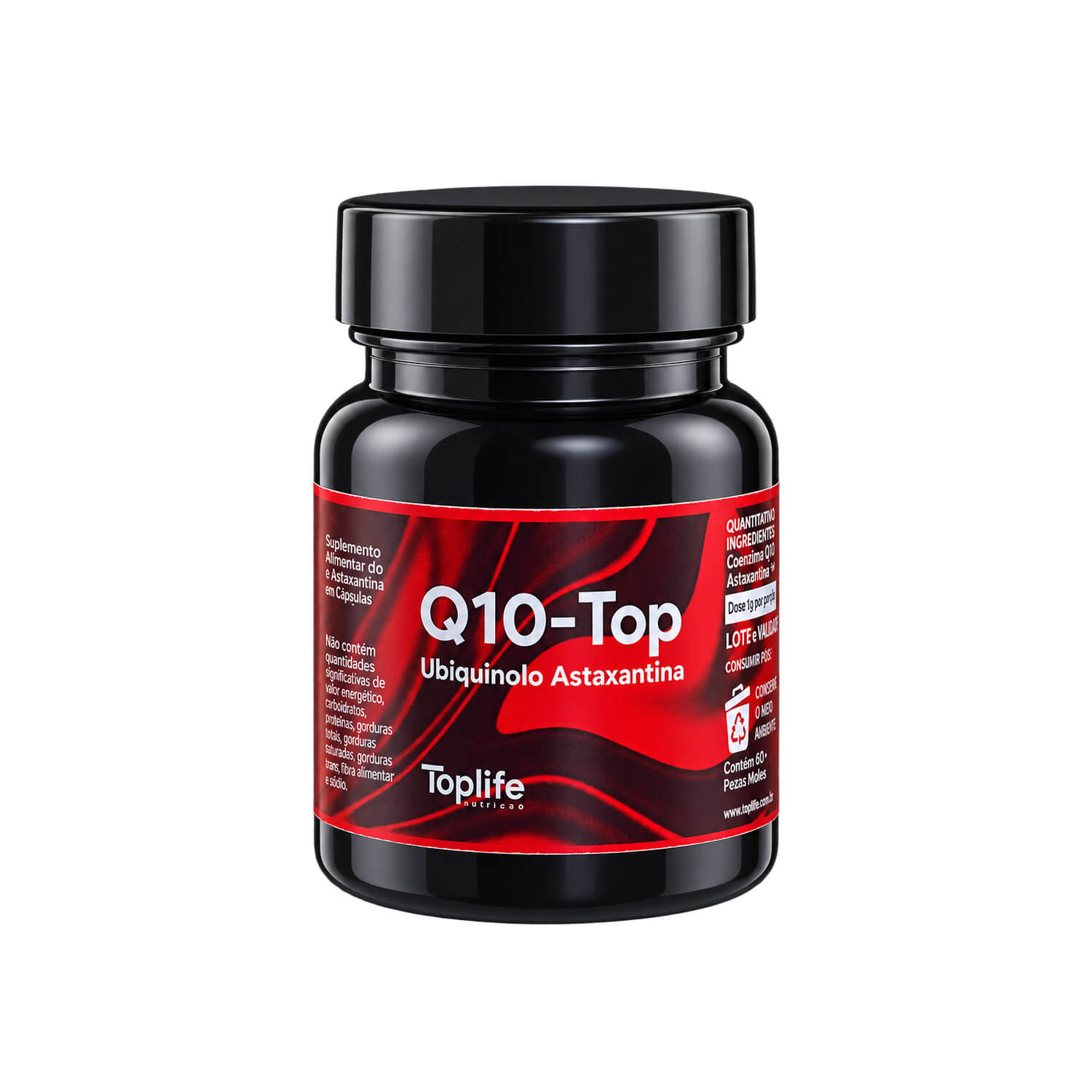
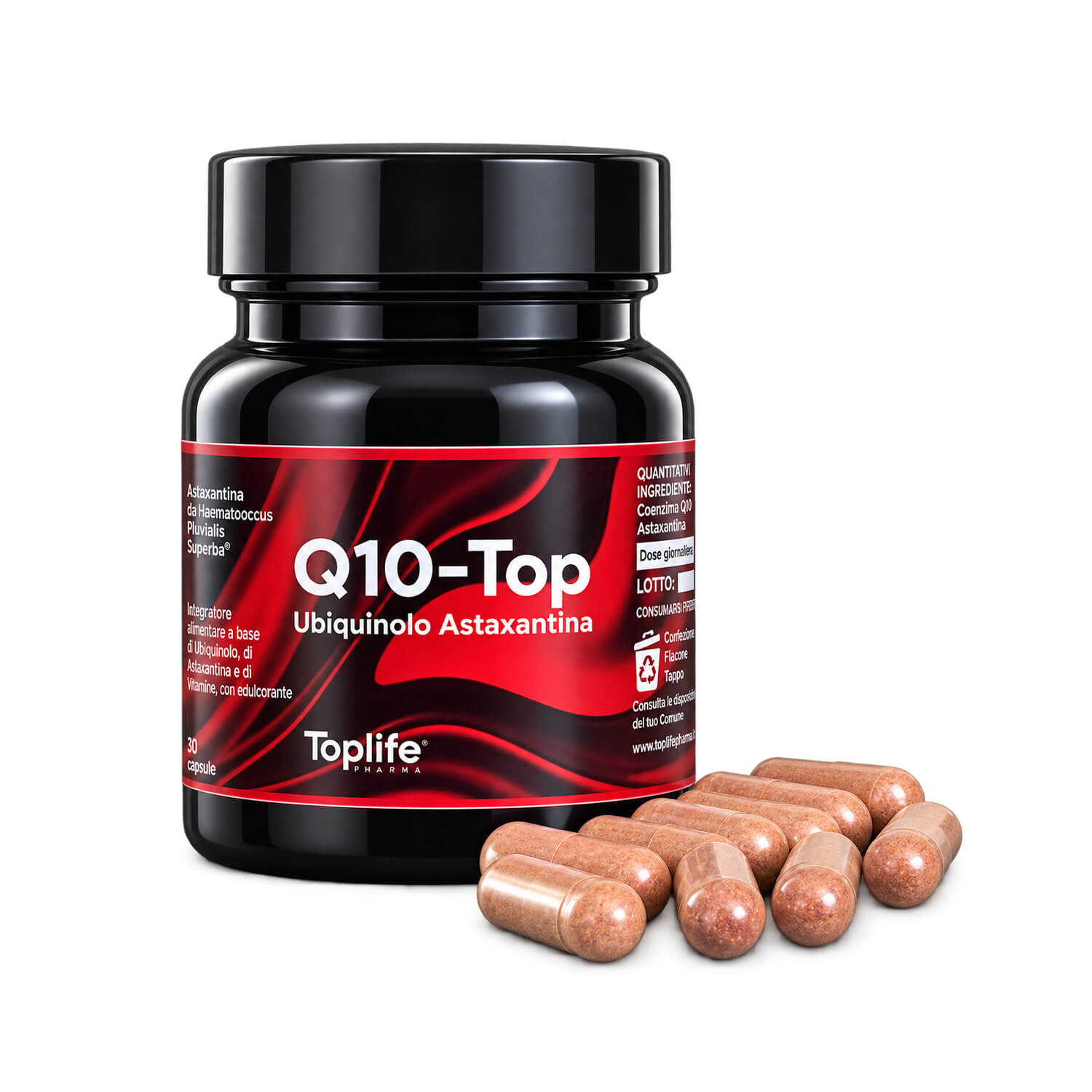
Q10-Top contains ubiquinol, one of the physiological forms in which Coenzyme Q10 occurs in the body.
From a biochemical perspective, Coenzyme Q10 is involved in the electron transport chain, which plays an important role in the production of ATP in the mitochondria. With increasing age, the concentration of Coenzyme Q10 in the body can change. Diet, lifestyle, and individual factors can also influence Q10 levels.
What is astaxanthin?
Astaxanthin is a fat-soluble carotenoid belonging to the xanthophyll group. It is characterized by its intense red-orange color and occurs naturally in various aquatic organisms.
The astaxanthin in Q10-Top is derived from the microalga Haematococcus pluvialis, one of the most important natural sources of this carotenoid.
The extract used is standardized to an astaxanthin content of 5%. This ensures a defined and consistent concentration. One Q10-Top capsule provides 5 mg of astaxanthin.
How is Q10-Top composed?
Q10-Top combines ubiquinol and astaxanthin in a single capsule. The two fat-soluble substances differ in their origin and properties and are the subject of nutritional research.
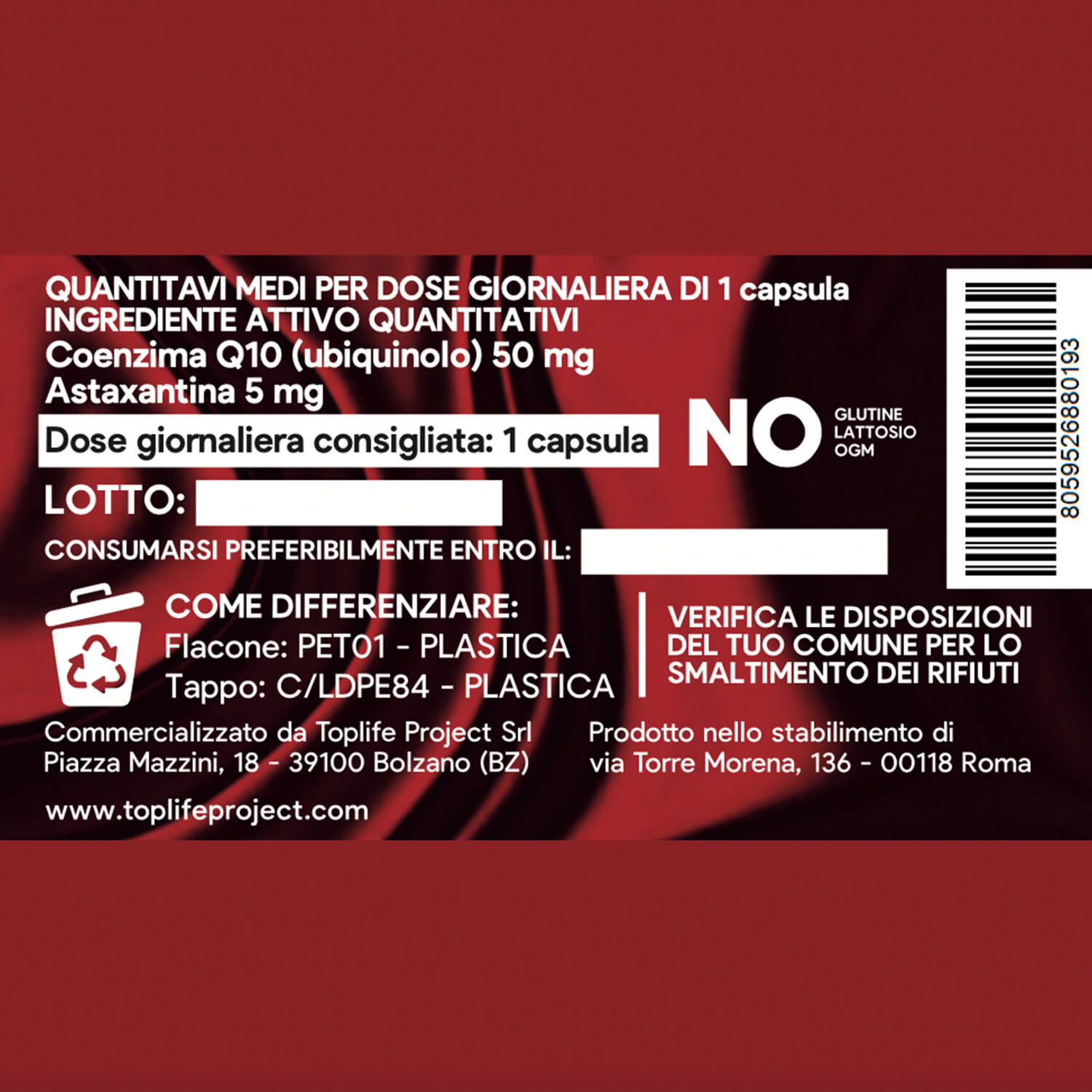
The recommended daily dose provides:
- 50 mg of Coenzyme Q10 in the form of ubiquinol;
- 5 mg of natural astaxanthin from the microalga Haematococcus pluvialis.
Why combine ubiquinol and astaxanthin?
Ubiquinol and astaxanthin are two distinct fat-soluble substances that are scientifically studied in connection with cellular processes.
Q10-Top combines both substances in a clearly structured formula. This means just one plant-based capsule per day is enough.
Who is Q10-Top for?
Q10-Top is intended for adults who:
- want to supplement their diet with Coenzyme Q10 (in the form of ubiquinol) and astaxanthin;
- prefer Coenzyme Q10 in its reduced form as ubiquinol;
- are looking for astaxanthin from a clearly identified natural source;
- want to combine both ingredients in a single formula;
- pay closer attention to their diet as they get older;
- have an intense and demanding daily routine;
- prefer a simple and practical way to take supplements.
Why Q10-Top?
- Coenzyme Q10 in its reduced form as ubiquinol
- 50 mg ubiquinol per daily dose
- 5 mg astaxanthin per daily dose
- Natural astaxanthin from Haematococcus pluvialis
- Extract standardized to 5% astaxanthin
- Two substances in a single formula
- Plant-based capsule shell
- Just one capsule a day
- Gluten-free, lactose-free and GMO-free (Genetically Modified Organisms)
- One pack lasts 60 days
Active ingredients per daily dose
| Active ingredients | 1 capsule |
| Coenzyme Q10 (ubiquinol) | 50 mg |
| Astaxanthin | 5 mg |
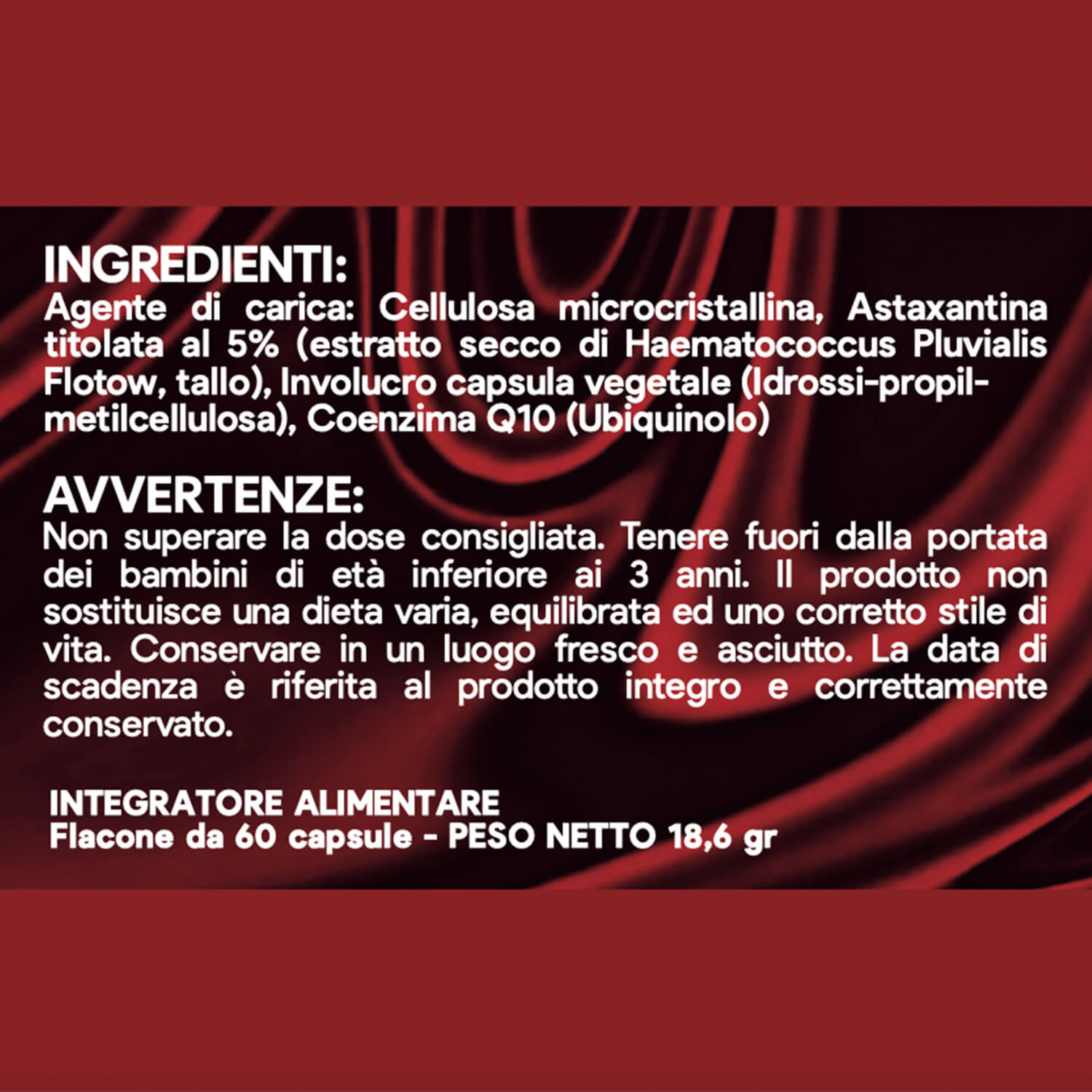
Ingredients
Coenzyme Q10 (ubiquinol), dry extract standardized to 5% astaxanthin from the thallus of Haematococcus pluvialis Flotow, bulking agent: microcrystalline cellulose, plant-based capsule shell (hydroxypropyl methylcellulose)
Recommended use
It is recommended to take one capsule daily, preferably with a meal.
Notes
The stated recommended daily intake should not be exceeded. Keep out of reach of children under three years of age. Food supplements are not a substitute for a varied and balanced diet and a healthy lifestyle.
Store in a cool, dry place. The best-before date refers to the product unopened and properly stored.
During pregnancy and breastfeeding, or in case of illness or if taking medication, medical advice should be sought before use.
Pack size
Tub containing 60 plant-based capsules.
Net weight: 18.6 g.
Coenzyme Q10 in scientific research
Coenzyme Q10 is the subject of numerous scientific studies on cellular metabolism and various metabolic parameters.
A meta-analysis of 50 randomized clinical trials involving a total of 2,794 participants examined the relationship between Coenzyme Q10 supplementation and lipid profile in adults. On average, statistically significant changes were observed in total cholesterol, LDL cholesterol, HDL cholesterol, and triglyceride values.
In another randomized, double-blind, placebo-controlled study, the daily intake of 120 mg of Coenzyme Q10 was examined in 101 adults with dyslipidemia over a period of 24 weeks. Changes in certain functional properties of HDL cholesterol were observed.
The available studies examined different dosages, formulations, and population groups. The results describe some of the current areas of research on Coenzyme Q10, but do not demonstrate any specific effects of the Q10-Top formulation and must not be understood as therapeutic claims.
Studies and sources
- Liu Z. et al. Effects of Coenzyme Q10 Supplementation on Lipid Profiles in Adults: A Meta-analysis of Randomized Controlled Trials. Journal of Clinical Endocrinology & Metabolism, 2023. View study
- Zou J. et al. Coenzyme Q10 supplementation improves cholesterol efflux capacity and antiinflammatory properties of high-density lipoprotein in Chinese adults with dyslipidemia. Nutrition, 2022. View study
- Turunen M., Olsson J., Dallner G. Metabolism and function of coenzyme Q. Biochimica et Biophysica Acta, 2004. View study
- Fernández-del-Río L. et al. Metabolic targets of coenzyme Q10 in mitochondria. Antioxidants, 2021. View study
- Ambati R.R. et al. Astaxanthin: sources, extraction, stability, biological activities and commercial applications. Marine Drugs, 2014.
- Fakhri S. et al. Astaxanthin: a mechanistic review on its biological activities and health benefits. Pharmacological Research, 2018.
- Davinelli S. et al. Astaxanthin in skin health, repair, and disease: a comprehensive review. Nutrients, 2018. View study
There are no reviews yet.